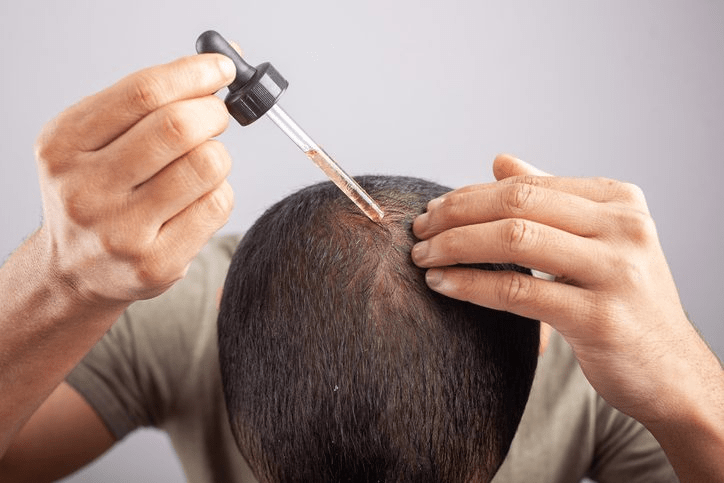

For many men, the first signs of a receding hairline or a thinning crown can be a source of significant anxiety. While “male pattern baldness” (androgenetic alopecia) is often discussed as an inevitability of aging, modern dermatology views it as a manageable condition. The key to successful hair restoration lies in understanding the biological clock of the hair follicle and intervening with the right concentration of active ingredients before the follicle enters a permanent state of dormancy.
The Biological Mechanism of Thinning: The DHT Factor
The primary driver behind male hair loss is a hormone called Dihydrotestosterone (DHT). In individuals genetically predisposed to hair loss, DHT attaches to receptors in the scalp’s hair follicles. This process, known as follicular miniaturization, causes the follicle to shrink over time.
As the follicle shrinks, the hair it produces becomes progressively thinner, shorter, and less pigmented—a process called “vellus hair” transformation. Eventually, the follicle stops producing hair altogether. To reverse this, a treatment must achieve two goals: it must stimulate blood flow to the root and prolong the “anagen” or growth phase of the hair cycle.
Breaking the Plateau: Why 5% Minoxidil Isn’t Always Enough
For decades, the standard approach has been a 5% Minoxidil solution. While this works for a broad segment of the population, a significant number of men experience a “plateau” where hair loss slows down but regrowth remains minimal. This is often because the concentration isn’t high enough to penetrate a thick scalp barrier or provide the level of vasodilation necessary for stubborn follicles.
This is where high-potency formulations become essential. By increasing the concentration, you enhance the absorption rate and provide a stronger stimulus to the follicular blood vessels.
For those who have not seen satisfactory results with standard over-the-counter options, a more robust intervention is required. Many men are now turning to specialized formulas, such as choosing Morr 12.5% solution, to bridge the gap between maintenance and actual regrowth. This higher concentration is specifically engineered to target areas where lower doses have failed to stimulate the scalp effectively.
The Vasodilation Effect: How It Works
Minoxidil does not directly block DHT; instead, it acts as a powerful vasodilator. It relaxes the smooth muscle walls of the blood vessels, allowing more oxygen, glucose, and amino acids to reach the hair bulb. This “nutrient rush” essentially shocks the follicle back into the growth phase.
The clinical efficacy of this process is well-documented. According to the Mayo Clinic’s guide on hair loss treatments, consistency is the most critical factor. Because hair grows in cycles, a treatment must be present throughout the entire transition from the resting phase back to the active phase.
A Comprehensive 3-Step Protocol for Maximum Results
If you are using a high-potency 12.5% solution, it is important to optimize your entire routine to ensure the scalp is receptive:
- Scalp Preparation: Use a clarifying shampoo once a week to remove sebum and dead skin cells. A “congested” scalp can block the absorption of topicals.
- Strategic Application: Apply the solution directly to the skin, not the hair. Massage it gently with your fingertips to further stimulate local circulation.
- Synergistic Care: Consider incorporating a microneedling routine (derma roller) once a week. Research suggests that creating micro-channels in the skin can significantly increase the absorption and efficacy of Minoxidil solutions.
Managing Expectations: The Timeline of Regrowth
One of the biggest reasons hair restoration “fails” is that users stop too soon. The hair growth cycle is slow.
- Months 1-2: You may experience “shedding.” This is actually a positive sign; the treatment is pushing out old, weak hairs to make room for new, stronger ones.
- Months 3-6: Fine, colorless hairs begin to appear in previously thinning areas.
- Months 6-12: These hairs thicken and gain pigment, leading to a visible increase in density.
Conclusion: Taking Control of Your Image
Hair loss is a progressive condition, meaning the best time to start treatment was yesterday. The second best time is today. By moving beyond standard retail concentrations and utilizing professional-grade, high-potency solutions, you are giving your follicles the best possible chance to recover. Science-backed topicals like the 12.5% Morr solution represent the cutting edge of non-surgical hair restoration, providing a powerful alternative for men dedicated to maintaining their appearance.