
A robotic pool cleaner is one of the most reliable pieces of equipment you can own. With no permanent plumbing connections and no reliance on your pool pump, there is very little that can go wrong mechanically. But like any machine that spends its working life submerged in chemically treated water, it needs regular care to reach its full lifespan.
Most owners rinse the filter and call it done. That handles the basics, but it misses the slow accumulation of problems that eventually shorten the life of the motor, degrade the drive system, and reduce cleaning performance below what you paid for.
A proper maintenance schedule takes about ten minutes a week and another thirty minutes at the start and end of each season. Follow it, and your cleaner will run well for five to seven years or more. Ignore it, and you will be shopping for a replacement in half that time.
After Every Cleaning Cycle
These are the non-negotiable steps. Skipping even one cycle of filter maintenance reduces suction and forces the pump motor to work harder, which shortens its life.
- Remove the cleaner from the pool and set it on the deck
- Open the filter compartment and remove the cartridge or bag
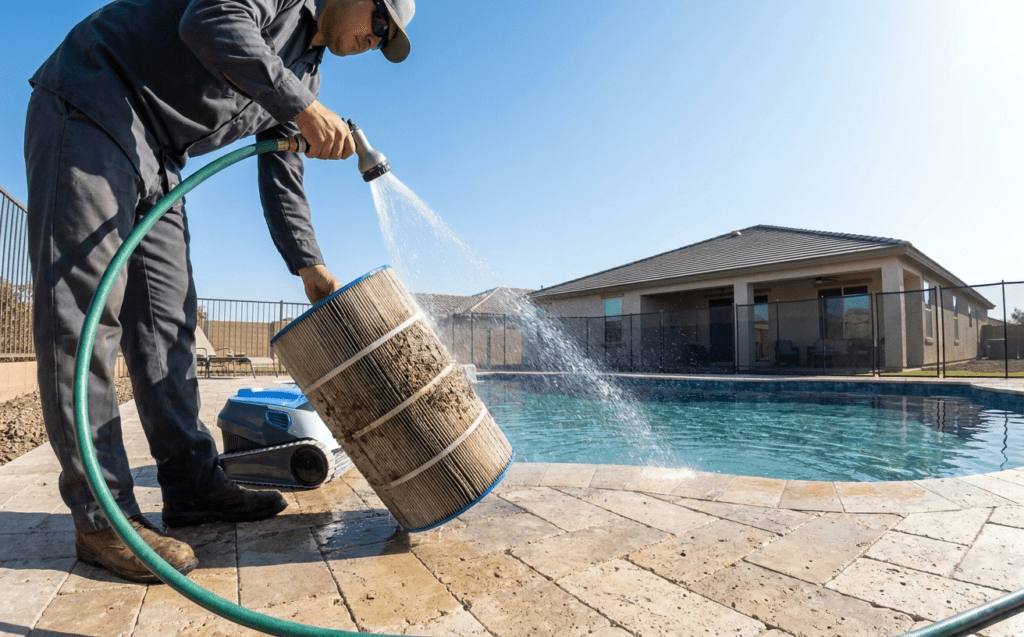
- Rinse the filter thoroughly with a garden hose, working from the inside out to push debris away from the mesh
- Inspect the intake port for tangled hair, string, or leaves that could block suction
- Let the filter dry completely before reinstalling it
A clogged filter is the single most common cause of poor cleaning performance. When the filter cannot pass water freely, the pump draws more current and runs hotter. Over time, this degrades the motor windings and eventually causes failure.
Weekly Maintenance
Once a week, go beyond the basic rinse and check the parts that affect how the cleaner moves through the water.
Check the drive tracks or wheels for wear. Tracks stretch over time, which reduces grip and causes the cleaner to slip on walls. If you notice the cleaner struggling to climb or spinning in place, the tracks are the first thing to inspect.
Look at the brushes. Worn brushes flatten against the surface and stop agitating debris. Most manufacturers recommend replacing brushes every one to two seasons, depending on how often you run the cleaner.
Examine the power cable for kinks, cuts, or exposed wires. The cable takes a lot of abuse from being coiled and uncoiled repeatedly, and damage near the connection point is common. A frayed cable is a safety hazard that needs immediate replacement.
For a deeper dive into which parts need attention and when, iGarden’s 2026 robotic cleaner guide includes detailed maintenance timelines, replacement part numbers, and troubleshooting steps for common issues.
Monthly Maintenance
Once a month, take a closer look at the internal components that you do not see during the weekly checks.
- Remove the top cover and check for water intrusion around the motor housing seals
- Inspect the impeller for wrapped hair or thread that can slow the pump
- Test the swivel on the power cable to make sure it rotates freely without catching
- Run the cleaner briefly out of water to listen for grinding or unusual noises from the drive motors
Water intrusion is the silent killer of robotic cleaners. The seals that keep water out of the motor compartment degrade slowly over time. If you catch a failing seal early, a replacement costs a few dollars. If water reaches the motor, the repair bill exceeds the value of the machine.
Opening Season: Spring Startup
When you pull the cleaner out of storage for the new season, do not drop it straight into the pool. Take thirty minutes to go through a startup routine that catches any problems before they cause damage.
- Uncoil the power cable fully and lay it in the sun to relax the memory coils
- Install a fresh filter cartridge rather than reusing last season’s
- Inspect all seals and gaskets for cracking or shrinkage from winter storage
- Run the cleaner on a dry surface for two minutes to verify drive motor function
- Run the pump motor briefly by placing the unit in a few inches of water on the pool step
If anything sounds wrong during the dry test, do not put the cleaner in the water. Grinding, clicking, or hesitation in the drive motors usually means a gear or bearing needs attention.
Closing Season: Winter Storage
How you store the cleaner over winter determines whether it starts up smoothly the following spring. A few extra minutes of preparation prevent months of degradation.
Clean everything thoroughly. Rinse the filter, the body, the cable, and the brushes. Let the entire unit dry completely before storing. Any residual moisture trapped inside the housing promotes mold and corrosion during months of inactivity.
Store the cleaner indoors in a climate-controlled space if possible. A garage or shed that stays above freezing is acceptable. Never leave the cleaner outside or in an unheated shed where temperatures drop below freezing, as water trapped in the pump can freeze and crack the housing.
Coil the cable loosely. Do not wrap it tightly around the cleaner body. Tight coiling stresses the internal conductors and creates kinks that become permanent over time. Use a figure-eight pattern or a cable reel to keep it relaxed.
Remove the filter cartridge and store it separately in a dry bag. This prevents any organic residue from decomposing inside the filter mesh over the winter, which would create a persistent odor and reduce filtration effectiveness next season.
The Payoff for Consistent Care
A well-maintained robotic cleaner runs at peak performance year after year. The suction stays strong because the filter and impeller are clean. The navigation stays accurate because the drive tracks grip properly. The motor runs cool because nothing is forcing it to work harder than designed.
Neglected cleaners decline slowly, so the drop in performance is easy to miss. You compensate by running longer cycles, which accelerates the wear. It is a slow spiral that ends with an expensive replacement that could have been avoided with ten minutes of weekly attention.
Treat the maintenance schedule as part of the ownership cost, not an optional extra. The few minutes you spend caring for the machine pay back in years of reliable service and consistently clean water.