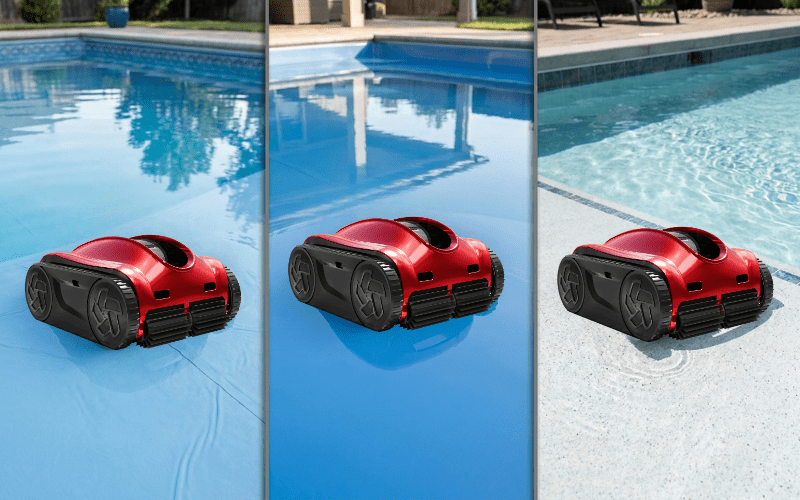

Choosing a robotic pool cleaner is not only about battery life, navigation, or cleaning time. Pool surface material also matters. That point is easy to miss, especially for first-time pool owners. Many people assume that if a cleaner works well in one pool, it should work the same way in every pool. In real use, that is not always true.
Vinyl, fiberglass, and plaster each create a different cleaning environment. They feel different underfoot. They collect debris in different ways. They also change how dirt settles, how algae forms, and how a cleaner moves across the floor and walls. A pool owner does not need to become a surface expert. Still, it helps to understand how material can shape cleaning results.
A robotic cleaner can perform well across many pool types. But expectations should be adjusted to match the pool itself. When owners understand the surface first, they usually make better decisions and feel more satisfied with regular cleaning.
Why Pool Surface Material Affects Cleaning Performance
Pool surfaces do more than define appearance. They also influence traction, debris behavior, and the amount of brushing a pool may need. A smooth surface often behaves very differently from a rough one.
Some surfaces let debris slide and collect in easy-to-reach areas. Others hold fine dirt more firmly. Some allow a cleaner to move with less resistance. Others create more drag or make wall travel more demanding. That does not mean one surface is always better than another. It means cleaning patterns will not look exactly the same in every pool.
Surface Texture Changes How Dirt Builds Up
Texture is one of the biggest differences between these materials. A smoother surface often releases dirt more easily. A rougher one may hold onto dust, organic residue, or light algae more stubbornly.
This affects what owners see after a cleaning cycle. In one pool, the robot may leave the surface looking bright after a single pass. In another, there may still be some dull areas or fine residue that need more time or occasional brushing.
Surface Type Also Changes Movement
Traction matters too. A cleaner must grip the floor and walls well enough to move with control. On some surfaces, climbing may feel more stable. On others, the cleaner may still work well but move in a slightly different pattern.
That is why owners should not judge cleaning quality only by one short test. They should consider whether the machine is working in a pool that is smooth, textured, older, newly finished, or more prone to buildup.
What to Expect From a Cleaner in Vinyl Pools
Vinyl pools are known for their smooth and gentle surface. Many owners like them because they feel soft and look clean with regular care. From a robotic cleaning perspective, vinyl often creates a less abrasive environment.
Smooth Surfaces Can Help Debris Move More Easily
Because vinyl is smooth, fine debris may settle in predictable areas. Leaves, dirt, and sand often do not cling to the surface as strongly as they can on rougher materials. That can make routine cleaning easier in many cases.
A robotic cleaner may move efficiently across the floor and lower walls. Owners may also notice that light debris is removed fairly quickly during normal cycles.
Gentle Contact Still Matters
Even though vinyl is smooth, owners should still care about contact and movement. Sharp debris, poorly maintained wheels, or rough handling can all matter more in a vinyl-lined pool. The issue is not usually the cleaner itself. The issue is how the cleaner is used and maintained over time.
A clean filter, well-maintained brushes, and proper retrieval habits all help support better results. In vinyl pools, the goal is often consistent cleaning without unnecessary surface stress.
What to Expect From a Cleaner in Fiberglass Pools
Fiberglass pools are also smooth, but they do not behave exactly like vinyl. Their surface is often firm, sleek, and less porous than plaster. This can be an advantage for daily cleaning.
Fiberglass Often Supports Easy Routine Cleaning
Because the surface is smooth, dirt and small debris may be easier to remove during regular cycles. Many owners find that fiberglass pools respond well to automated cleaning because the surface does not trap residue as deeply.
Wall cleaning can also feel more predictable in a fiberglass pool. When the water is balanced and the pool is cleaned regularly, buildup may stay lighter and easier to manage.
Slippery Conditions Can Change Expectations
A smooth pool can still create challenges if residue develops. Sunscreen, body oils, pollen, and early algae growth may create slick areas. In those moments, owners may expect perfect cleaning after one pass, but the issue may be bigger than simple debris pickup.
A cleaner can help control routine mess, but surface condition still matters. In fiberglass pools, strong results often come from pairing robotic cleaning with stable chemistry and light manual care when needed.
What to Expect From a Cleaner in Plaster Pools
Plaster is common in many in-ground pools. It can look classic and strong, but it often has a more textured surface than vinyl or fiberglass. That texture changes cleaning expectations right away.
Rougher Texture Can Hold Fine Debris More Easily
Plaster can grab onto fine dirt, dust, and early algae film more than smoother materials do. This does not mean a robotic cleaner is the wrong choice. It means owners should expect more active cleaning conditions.
A unit such as a robotic pool vacuum may still handle regular debris very well in a plaster pool, but some fine residue may need longer cleaning cycles or occasional brushing. This is especially true in older pools or in pools where the finish has become more uneven with age.
Surface Age Can Matter as Much as Surface Type
Not all plaster pools feel the same. A newer finish may behave differently from one that has seen years of chemical exposure and seasonal wear. As plaster ages, it may become rougher in spots. Small imperfections can also affect how debris settles and how a cleaner travels over the surface.
Because of this, plaster pool owners should think in practical terms. The cleaner may still save a great deal of time. It just may not create the same visual result after one cycle that a smoother pool surface would.
Why Expectations Should Change With the Pool Material
Many cleaning complaints are really expectation problems. Owners sometimes expect the same result across all pool types, but the surface changes the job.
One Pool May Need More Frequent Cleaning Than Another
A vinyl or fiberglass pool may stay visibly cleaner with shorter, regular cycles. A plaster pool may benefit from more frequent maintenance because fine dust and residue can become noticeable faster.
This does not mean the equipment is underperforming. It means the pool surface is shaping the result.
Brushing Needs Are Not Equal Across Materials
Some owners hope a robotic cleaner will remove the need for brushing altogether. That is not always realistic. In smoother pools, brushing may be needed less often. In plaster pools, it may still be an important part of the routine, especially for steps, corners, and textured wall areas.
How Owners Can Make Better Decisions
The best way to judge a robotic cleaner is to match it to real pool conditions. Surface material should be one of the first things considered, not an afterthought.
Think About Your Actual Pool, Not Just Product Claims
Owners should ask simple questions:
- Is the pool smooth or textured?
- Does fine debris collect quickly?
- Are walls easy to keep clean?
- Does the surface tend to hold dust or light algae?
These questions lead to better expectations and better use habits.
Consistency Usually Matters More Than Perfection
No cleaner will make every pool surface behave the same way. But regular automated cleaning can still reduce manual work in a major way. The key is to focus on steady results, not perfect results after every cycle.
Final Thoughts
Vinyl, fiberglass, and plaster each create a different cleaning experience. Smooth surfaces often allow easier debris removal and more predictable movement. Rougher plaster surfaces may demand more patience and more realistic expectations. None of this means robotic cleaning is less valuable. It only means the pool itself helps define what “good performance” looks like.
When owners understand their surface material, they make better choices and feel less frustrated. A robotic cleaner is most effective when it is judged in the context of the actual pool it cleans. That is the best way to set fair expectations and build a maintenance routine that works over time.